Quick answer
When trailer lights stop working, start at the earth and the plug, not the bulbs. Most faults are a poor earth, a corroded plug face or a broken wire, not a failed lamp. Check the plug and socket are clean and dry, test the earth, then work outwards to each light. If one side is dead it is usually the tail-light wire or earth on that side; if everything is dead it is almost always the main earth or the plug. Fast-flashing indicators after fitting LEDs are not a fault at all, just the car reading the lower current as a blown bulb.
| Symptom | Most likely cause | First check |
|---|---|---|
| Nothing works | Earth or plug | Earth pin and plug face |
| One side dead | Broken wire or earth that side | Tail-light wire and earth |
| Brake or fog only out | That circuit’s wire or bulb | The specific lamp and its feed |
| Indicators flash fast | LEDs drawing low current | Fit a fault eliminator |
Few things take the shine off a trip like hooking up the trailer and finding half the lights dead on the driveway. The good news is that trailer lighting is simple, so faults are usually quick to track down once you know the order to check things in. Work through it methodically and you will normally have it sorted without buying a single part.
Start with the earth and the plug
It is tempting to blame the bulbs, but the earth is the number one cause of trailer light gremlins. A trailer earths back through the plug, and that connection takes a beating from road salt, water and vibration. Before anything else:
- Unplug, and look at the plug and socket faces. Green or white corrosion, or a bent pin, is your culprit.
- Clean the contacts, and give them a smear of dielectric grease.
- Check the earth wire is sound where it joins the chassis. A loose or rusty earth point causes all sorts of odd behaviour.
A surprising number of “dead trailer” jobs are fixed right here, before you have even reached for a meter.
If nothing works at all
When every light is out, the fault is shared by all of them, which points straight to the earth or the plug. Confirm the car’s socket is live by testing it with a known-good board or lamp. If the car socket is fine, the problem is in the trailer’s earth or the plug wiring. Our 7-pin and 13-pin wiring guide shows which pin is the earth on each connector.
If one side is dead
One dead side almost always means a broken or chafed wire, or a poor earth, on that side. On a 7-pin plug the right tail and marker lights run on the brown wire and the left on the black. Follow that side’s wire from the plug to the lamp, looking for breaks, pinch points and corrosion at the lamp’s own earth.
If just the brake, fog or reverse is out
When a single function fails but the rest are fine, the fault is in that one circuit: its wire, its connector, or the lamp itself. Check the relevant pin at the plug (red is brake on a 7-pin, blue is fog), then the lamp. This is also where a genuine bulb or LED failure shows up, since it only affects the one function.
Indicators flashing too fast after fitting LEDs
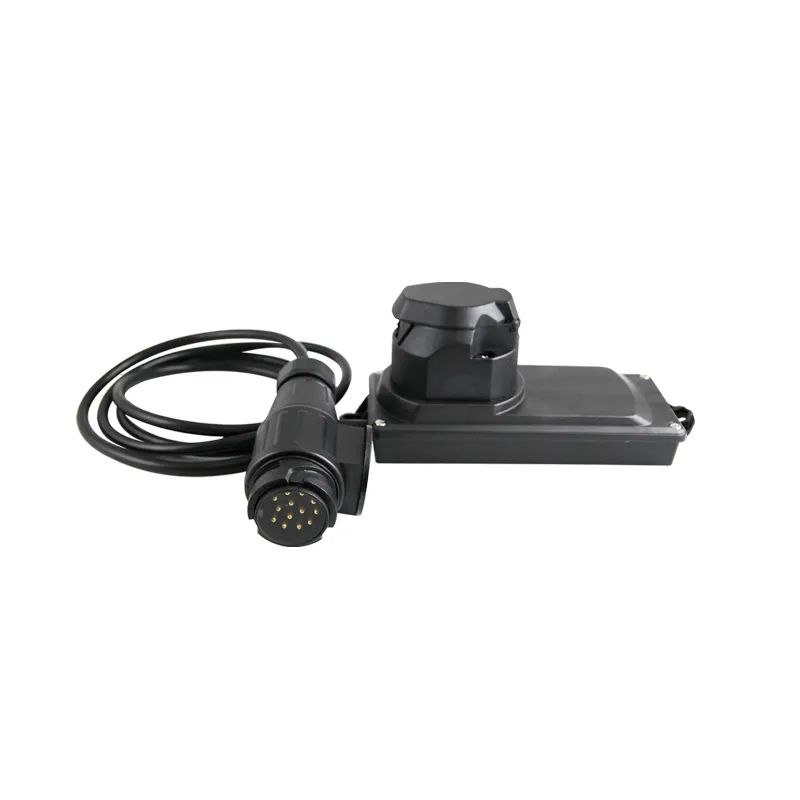
This one is not a fault, even though it feels like one. LED lamps draw far less current than old bulbs, so some vehicles read them as a blown bulb and flash the indicators at double speed. The fix is a small control unit that restores the expected load. We explain it fully in why are my LED trailer lights blinking, and the tidy solution is the 68007 fault eliminator, which you will find in our control units and fault eliminators range.
When it is worth upgrading rather than repairing
If you are chasing repeated failures on old bulb units, especially after rough sites or a wet winter, it is often quicker and cheaper in the long run to fit LED. There is no filament to vibrate apart, they are sealed against water, and they last many times longer. You do not need to run new wires to do it either, as we explain in replacing trailer lights with LEDs without new wiring. Browse our rear lights or the full LED trailer lights range to see what fits.
Still stuck after all that? Tell us what is happening and we will help you get to the bottom of it.