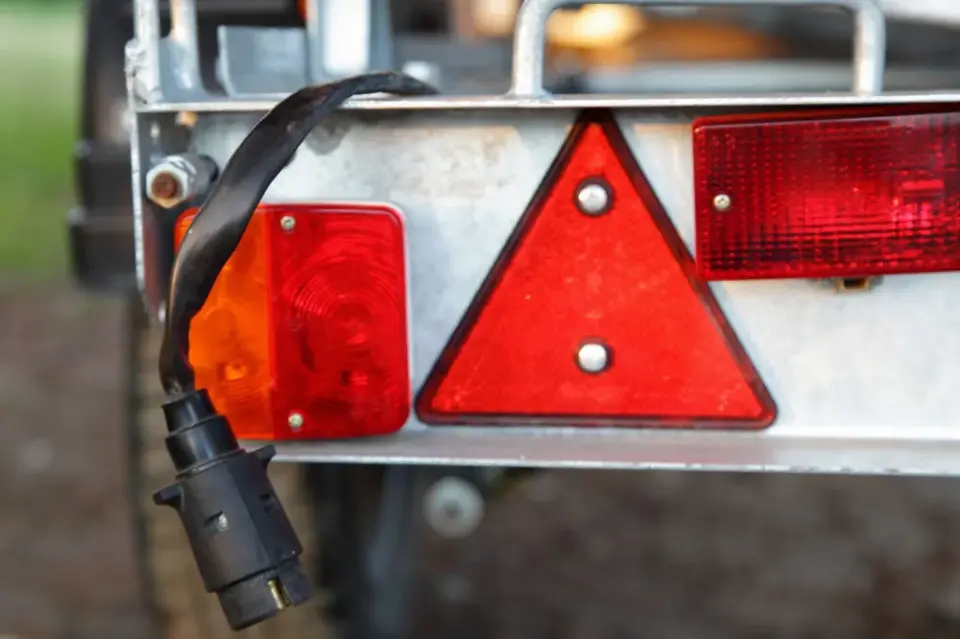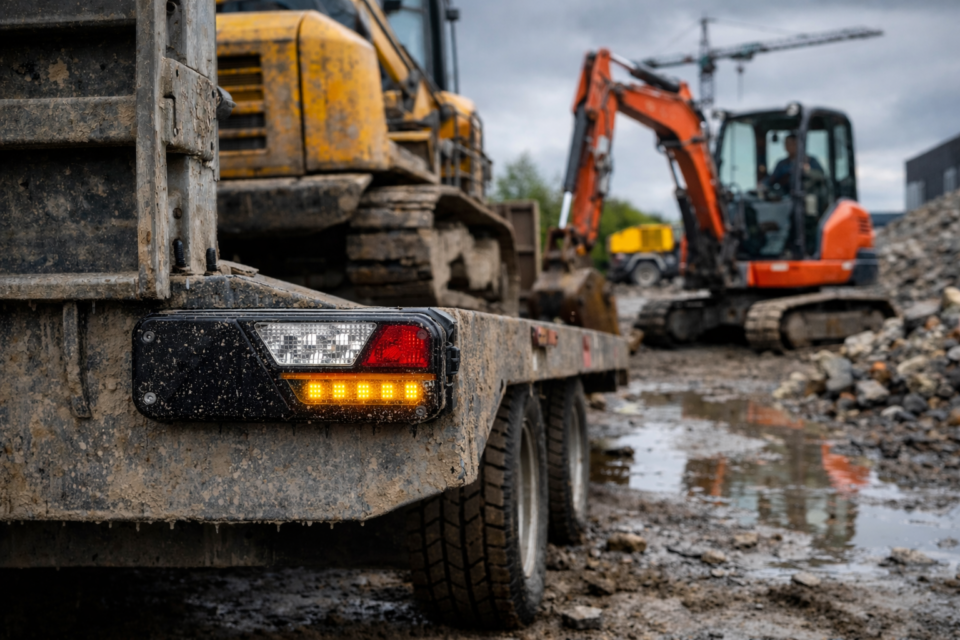
Construction sites are among the toughest environments any trailer will face. The combination of mud, vibration, impacts from loose materials, and constant loading and unloading puts enormous strain on every component, and trailer lighting is no exception. If you have been through multiple sets of rear lights on your plant trailer, it is time to look at construction trailer lights built for the job.
Why Standard Lights Fail on Construction Sites
Most trailer lighting is designed for road use. It handles rain and road spray well enough, but construction sites present a completely different set of challenges:
- Vibration – Travelling over rough ground, speed bumps, and unmade roads shakes lights constantly. Cheap housings crack, mounts loosen, and solder joints break.
- Impact damage – Loading machinery onto beavertail trailers and low loaders means chains, ramps, and steel tracks passing inches from the rear lights. One knock can split a housing.
- Mud and dust – Fine construction dust works its way into any gap in a light housing. Combine that with moisture and you get a paste that corrodes connections and dims lenses.
- Pressure washing – After a day on site, most operators jet-wash their trailers. Low-rated lights cannot handle direct water pressure without letting moisture in.
The result is the same every time. Lights fail, you get pulled over or fail an MOT, and you are buying replacements again. It is a false economy.
What Construction Trailers Actually Need
For beavertail trailers, plant hire trailers, skip loaders, tipper trailers, and low loaders, you need construction trailer lights that tick several boxes:
- IP67 rated – Complete dust protection and waterproof to 1 metre submersion. This is non-negotiable for site work.
- Vibration resistant – LED technology is inherently more resistant to vibration than filament bulbs, which have fragile elements that snap under constant shaking.
- Heavy-duty housings – Solid polycarbonate or ABS housings that can absorb minor impacts without cracking.
- E-mark approved – Legal for UK road use. If a light does not carry an E-mark, it should not be on a trailer that uses public roads.
- 12V and 24V compatibility – Many plant and construction vehicles run 24V systems. Your lights need to match.
The Lucidity Range for Heavy-Duty Use
We stock the full Lucidity range of LED construction trailer lights specifically because they meet every one of these requirements. Lucidity units are specified by major UK trailer manufacturers for good reason. They are built to handle the conditions that construction trailers face daily.
The rear combination lamps offer stop, tail, indicator, and reverse functions in a single sealed unit. Marker lights provide clear side visibility on wider plant trailers and low loaders. Every unit is IP67 rated and E-mark approved.
Browse our construction trailer lighting range to see the full selection.
Fitting Considerations for Construction Trailers
Beyond choosing the right lights, how you fit them matters on construction trailers:
- Use stainless steel fixings rather than plated steel. They will not corrode as quickly in wet, muddy conditions.
- Apply dielectric grease to all electrical connections. It prevents moisture ingress at the plug and socket.
- Consider recessed mounting where possible to reduce the chance of impact damage during loading.
- Check all connections and mounts regularly, especially if the trailer is used daily on rough ground.
Stop Replacing Lights Every Few Months
If you are tired of fitting new lights to your plant trailer or beavertail, the solution is straightforward. Fit construction trailer lights that are actually designed for the conditions. IP67-rated Lucidity LEDs handle dust, water, vibration, and pressure washing without issue. They last years, not months.
Take a look at our full range of LED trailer lights or contact us if you need advice on the right lights for your specific trailer setup. We are happy to help.