

Should you choose 12V or 24V LED lights? It’s the most common question when upgrading or repairing caravan and trailer lighting. With modern LED technology—and increasingly, multi-voltage electronics—the answer is not always straightforward. This guide explains the practical differences between 12V and 24V systems, the UK legal context (with official resources), and why dual-voltage Lucidity LED lamps are often the simplest, safest choice.
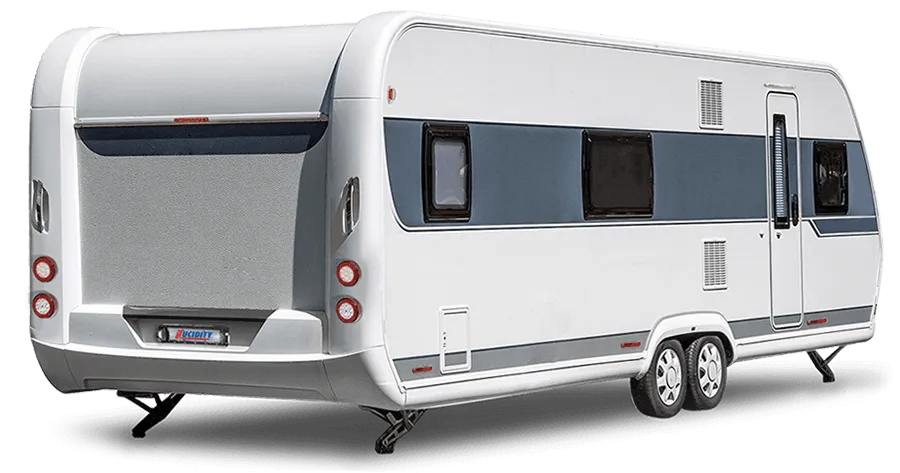
Understanding 12V vs 24V LED systems
Before you decide, start with the towing vehicle. Passenger cars, most 4x4s and motorhomes run 12V electrics; HGVs, many recovery vehicles and some plant equipment run 24V. The lamp voltage must match the supply—or you must choose a lamp designed to operate correctly on both.
12V lighting systems (cars, 4x4s, motorhomes, most leisure trailers)
- Typical for caravans, camper trailers, small utility trailers and horseboxes.
- Usually connected via 7-pin (ISO 1724) or 13-pin (ISO 11446) towing sockets.
- Ideal for short cable runs and standard leisure-use electrics.
If your caravan or trailer is towed by a car or 4×4, you will almost certainly need 12V lamps. If you ever switch to an HGV or agricultural tow unit, consider dual-voltage lamps from the outset.
24V lighting systems (HGVs, plant, commercial and agricultural trailers)
- Common on HGV-drawn trailers, plant and machinery, construction and agricultural trailers.
- Higher voltage reduces voltage drop on long cable runs and large multi-axle trailers.
- Preferred for commercial duty cycles and fleet standardisation.
Where a trailer is permanently paired with a 24V towing unit, 24V-only lamps are fine. If there’s any chance it will be towed by a 12V vehicle, specify dual-voltage.
Should you choose 12V or 24V LED lights?
Both are equally effective when correctly matched to the vehicle supply and wiring. The real question is flexibility. If your trailer will only ever be used behind a 12V car, 12V lamps are perfect. If it will only ever sit behind a 24V truck, 24V lamps are right. If there is any uncertainty—mixed fleets, occasional hire, or future resale—dual-voltage lamps remove the risk.
UK legal context you must meet
Whatever you choose, the installation must comply with UK road traffic law. These official resources are useful:
- The Road Vehicles Lighting Regulations 1989 (RVLR) — legal requirements for lighting and reflectors (see relevant Schedules for functions and positioning).
- The Highway Code – lighting requirements — general rules on using lights and rear fog lamps.
- DVSA MOT inspection manual (cars and light vans) — defects and reasons for failure relating to lamps and reflectors.
- Towing a trailer with a car: safety checks — GOV.UK guidance on lighting, reflectors and number plate visibility.
In practice this means:
- E-mark / ECE approval for the lamp functions you are using (stop, tail, indicator, reverse, rear fog, reflectors).
- Correct functions and positions for your category of trailer or caravan (e.g., rear fog on centre or offside; red triangular rear reflectors required on most UK/EU trailers; number-plate illumination on the registration side).
- Wiring and connectors compatible with the tow vehicle (7-pin or 13-pin) and circuits protected by correct fusing. Maintain good earths, sealed joints and adequate cable size to minimise voltage drop.
- Ongoing roadworthiness: all fitted lamps must work at all times; damaged or inoperative lamps can lead to prohibition notices and failed MOTs (where applicable).
The law does not dictate 12V or 24V; it requires that whatever you fit is approved, correctly installed and working. Dual-voltage helps you meet those aims while keeping options open.
The case for dual-voltage (12/24V) LED lamps
Dual-voltage lamps, such as those in the Lucidity range, automatically operate on either 12V or 24V without modification. For many users, that makes the purchasing decision immediate when asking, Should you choose 12V or 24V LED lights?
- One lamp covers both use-cases — ideal for mixed fleets, shared trailers and future resale.
- Fewer stock lines for manufacturers and workshops; easier spares management.
- Consistent brightness and performance across 12V and 24V systems when using quality multi-voltage electronics.
- Lower risk of fitting the wrong part during repairs or upgrades.
Which Lucidity lamps to consider
Popular dual-voltage Lucidity rear combination lamps include compact caravan/trailer units and heavy-duty truck/trailer modules. When choosing, confirm:
- Functions required (stop, tail, indicator, reverse, rear fog, reflector, number-plate light, side marker).
- Mounting pattern (e.g., M8 studs at specific centres) and available space.
- Connector style (flying leads, bayonet/AMP 7-pin, Superseal, or OEM plug-in).
- Left/Right variants and whether a triangular reflector is integrated (trailers typically require triangles; rigid trucks do not).
For caravans and small trailers, compact 6-function LED clusters with number-plate illumination are common. For plant/commercial trailers and rigid bodies, robust 7-function units (often with a rear 7-pin connector) are popular for durability and easy replacement.
Installation tips that prevent faults
- Match voltage and polarity: dual-voltage lamps still require correct wiring and earth continuity.
- Minimise voltage drop: use appropriate cable gauge, sound joints and sealed connectors—especially on long trailer looms.
- CANbus considerations: some tow vehicles monitor bulb load. If you see a dashboard bulb-failure warning after fitting LEDs, use a dedicated load device or vehicle-safe resistor recommended by the lamp manufacturer.
- Protect connections from water ingress with proper grommets, heat-shrink and dielectric grease where specified. Aim for at least IP67-rated lamps in exposed locations.
- Test all functions (including fog and reverse) with the trailer coupled to the actual towing vehicle before road use.
For further official guidance on lighting and reflectors positioning, consult the RVLR schedules and GOV.UK towing rules.
Common scenarios: which should you choose—12V or 24V?
- Car and 4×4 towing a caravan or small trailer: Use 12V lamps, or choose dual-voltage to future-proof.
- HGV tractor with plant or commercial trailer: Use 24V lamps, or dual-voltage if that trailer may be towed by a 12V vehicle at any point.
- Mixed users (farms, contractors, plant hire, motorsport): Dual-voltage is simplest—one lamp, any tow vehicle.
Frequently asked questions
Should you choose 12V or 24V LED lights for a caravan? Choose 12V if it is always towed by a car; if there’s any chance of 24V towing, choose dual-voltage. See GOV.UK safety checks for lighting and reflectors.
Do UK laws require a specific voltage? No. UK law requires approved lamps, correct positioning/functions and roadworthy operation—regardless of voltage. Refer to the RVLR and Highway Code lighting rules.
Do trailers need triangular reflectors? Yes, UK/EU trailers generally require red triangular rear reflectors. Check the reflector provisions in the RVLR and ensure your lamp or separate reflectors meet the specification.
Will LEDs trigger bulb warnings? Some vehicles monitor current draw. If warnings appear, fit an appropriate load/Smart Load device compatible with the indicator or lamp circuit, or consult a qualified auto-electrician.
Conclusion: should you choose 12V or 24V LED lights?
If your trailer’s life is clearly tied to a single tow vehicle type, match the lamp voltage to that vehicle. For everyone else—especially mixed users—the practical answer to Should you choose 12V or 24V LED lights? is: choose a high-quality dual-voltage LED lamp. You stay compliant, reduce installation risk and keep your options open as vehicles change.
Next steps
- Browse dual-voltage Lucidity LED lamps for caravans, trailers and commercial bodies.
- Ask our team to confirm mounting centres, connectors and legal function sets for your build.
- Review official guidance: RVLR, Highway Code lighting, GOV.UK trailer safety checks, and the DVSA MOT inspection manual.
Note: This guide is written for UK use. Always ensure your installation meets the applicable lighting and reflective equipment requirements and that all fitted lamps are maintained in working order.