
As more trailer and caravan owners upgrade from traditional incandescent lamps to LED lights, one question comes up repeatedly:
This guide explains when additional wiring is needed, common faults with LED upgrades, and how to stay compliant with UK towing laws and ECE Type Approval.
Why LED Lights Behave Differently on Trailers
LEDs draw far less power than traditional filament bulbs. This is great for efficiency — but can confuse some tow vehicles.
- Dashboard bulb-failure warnings
- Hyper-flashing indicators
- Dim or flickering lighting
- Incorrect fog or brake light behaviour
- Trailer detection faults on newer tow vehicles
- CANbus electrical error messages
These faults are not due to the LEDs — but because the vehicle expects a higher load.
When You Do Need Special Wiring for LED Lights
1: Modern Cars with CANbus Bulb-Monitoring
Some vehicles — especially German brands — monitor electrical load and assume a bulb has blown if LEDs draw too little power.
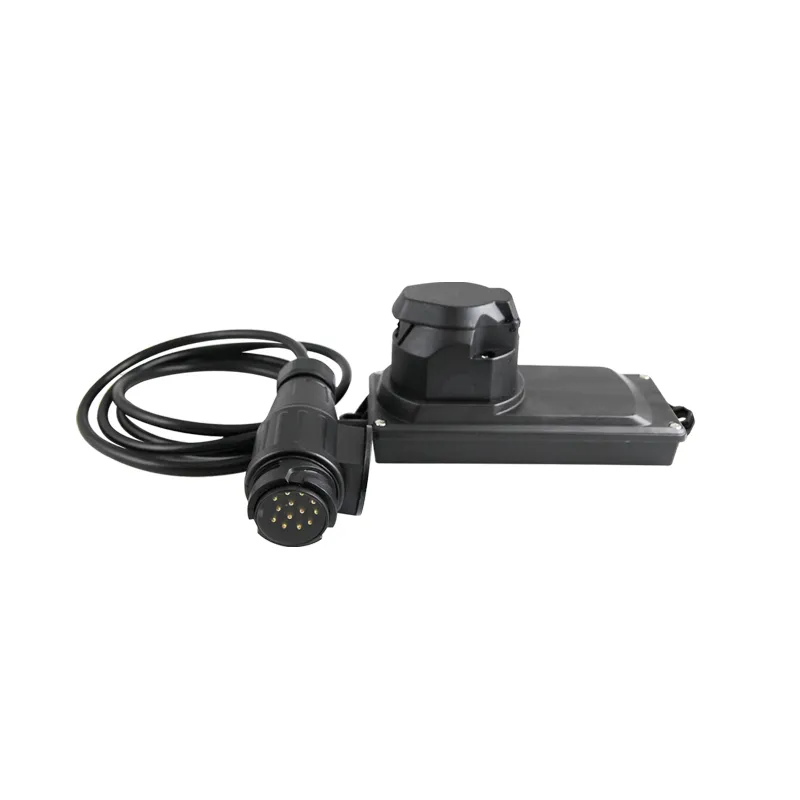
Solution: Fit a smart load device like the Lucidity 68007 to prevent false dashboard errors.
2: HGVs and Commercial Fleets
24V systems often work better with LEDs — but older fleets may have outdated electronics.
Solution: Choose dual-voltage rear lamps such as:
- Lucidity 26024N – 6-function rear lamp (12/24V)
- Lucidity 26025N – rear lamp with plate light (12/24V)
- Lucidity 26060 – combination rear lamp (12/24V)
No resistors or converters required.
3: Trailers with Damaged or Old Wiring Looms
Even the best LEDs won’t fix:
- Corroded wiring
- Bad grounding
- Water-damaged cabling
- Incorrect plug connections
Solution: Upgrade to fully sealed IP67 plug-and-play wiring looms for durability and Type Approval compliance.
4: Mixed Fleets (12V & 24V)
Some trailers swap between vans/cars (12V) and HGVs (24V).
Solution: Dual-voltage LEDs eliminate wiring changes and voltage converter failures.
When You Don’t Need Special Wiring
No special wiring required if:
- Lamps are ECE-approved for trailer use
- They are dual-voltage
- Your trailer wiring is clean and sound
- Your tow vehicle doesn’t use advanced CANbus systems
Lucidity LEDs are designed to work with most UK trailers without modification.
UK Rules: Road-Legal LED Lighting
You must comply with:
- Road Vehicle Lighting Regulations (RVLR)
- UN ECE Regulations for lamps and reflectors
- GB Type Approval for new trailers
No law requires special wiring — but the installation must be waterproof, fused correctly, and use approved products.
All Lucidity LED lights sold by Trailer Solutions are E-marked, ADR compliant and suitable for GB Type Approval.
Why Lucidity Makes LED Wiring Simple
- ✔ Dual-voltage 12V/24V
- ✔ Plug-and-play sealed connectors
- ✔ Load-friendly electronics
- ✔ IP67/IP69K waterproofing
- ✔ Fully Type Approval compliant
Recommended Products
- Lucidity 26024N — 6-function LED rear lamp
- Lucidity 26025N — rear lamp with plate light
- Lucidity 26060 — combination rear lamp
- Lucidity 68007 — smart load module
Product links will be added once live on TrailerSolutions.co.uk.
Conclusion — So, Do You Need Special Wiring?
Sometimes — but not always.
Most trailer and caravan owners can upgrade to LED lights with no changes at all — as long as you choose high-quality, dual-voltage, Type-Approved LEDs designed for towing.
If your tow vehicle has CANbus monitoring or older commercial electrics, a smart load device may be required.
Explore the full range of Lucidity LED trailer lamps for simple, error-free wiring.